The Macedon Ranges wine region is one of Australia’s true cool climate wine regions but has some significant variation in soil types and temperature. Clarrie’s Track is proud to be one of the small but growing group of “close planted” vineyards in the region.
The Macedon Ranges wine region is on the Southern end of the Great Dividing Range. As part of the Great Dividing Range, the highest point on the Macedon Ranges is the Camels Hump at 1100m above sea level. Altitude and latitude make it the coolest wine region on the Australian mainland, with harvest sometimes stretching into May.
The Macedon Ranges wine region is one of Australia’s true cool climate wine regions but has some significant variation in soil types and temperature. Clarrie’s Track is proud to be one of the small but growing group of “close planted” vineyards in the region. The Growing Degree Days (GDD) of Macedon Ranges places the region firmly in the Group 1 zone = “Cool Climate”.
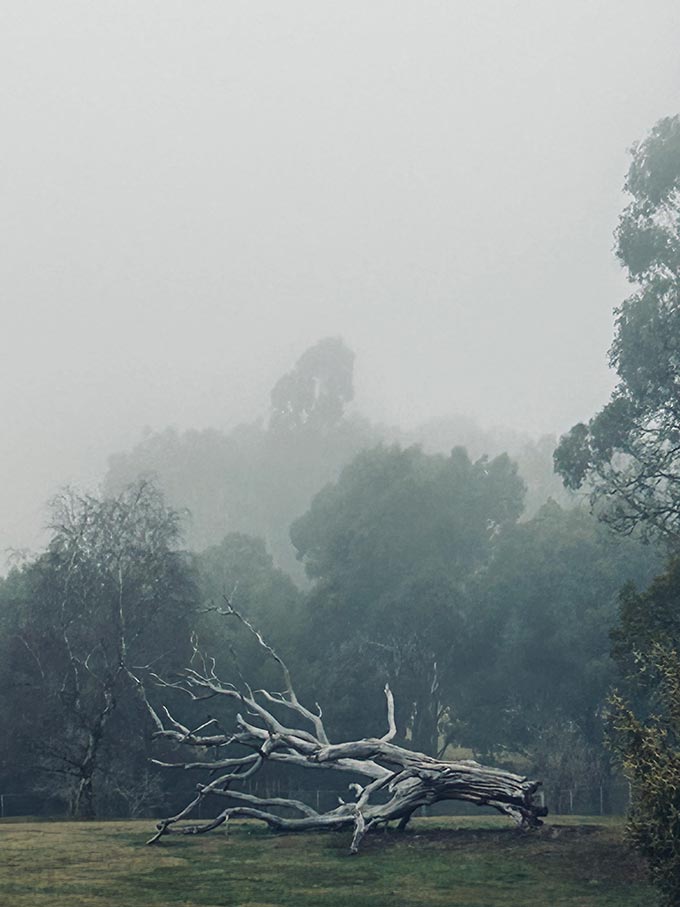
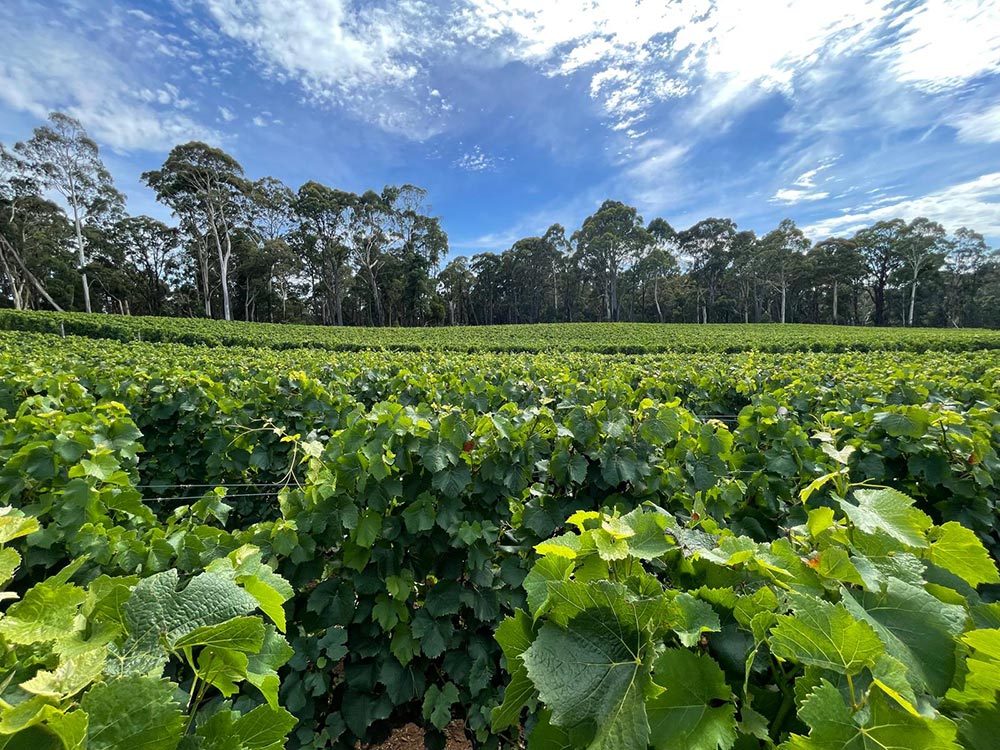
The region is extremely cool in the south-east and only marginally warmer in the north-west. The climate dictates the critical importance of correct vineyard site location in the almost glacial climate of the region’s south-east. Across the region however there are many different mesoclimates. There is a great variability in topography and geology. Each vineyard is influenced by its location in relation to mountains, forests, valleys and open grassland.
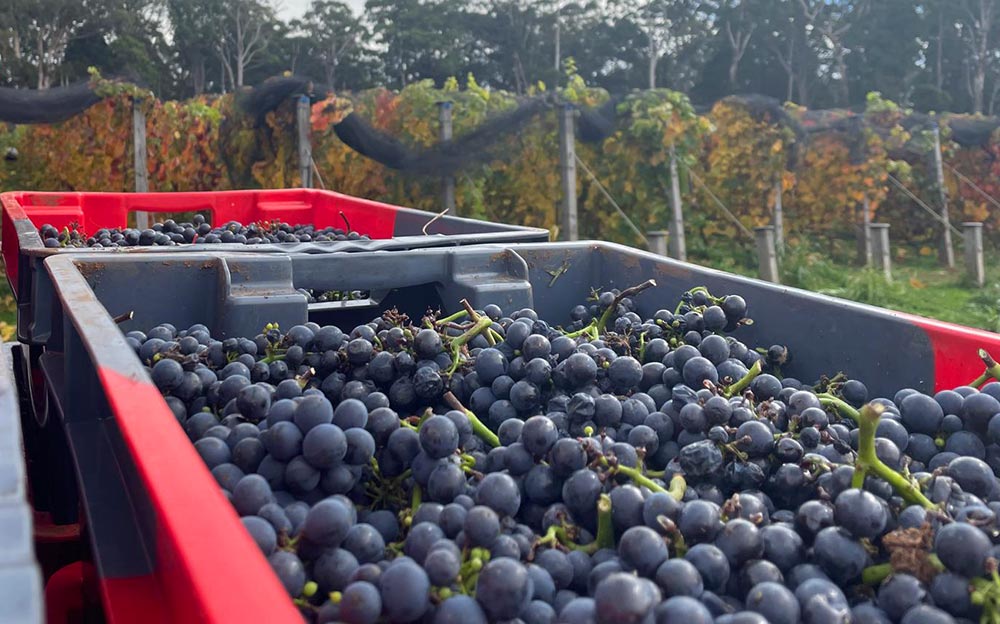
Autumn days are cool and nights are cold. As grapes ripen, the long hang time of the fruit allows the development of complex flavours and aromatics, and cool nights encourage the retention of these aromatics and the grapes’ natural acidity.
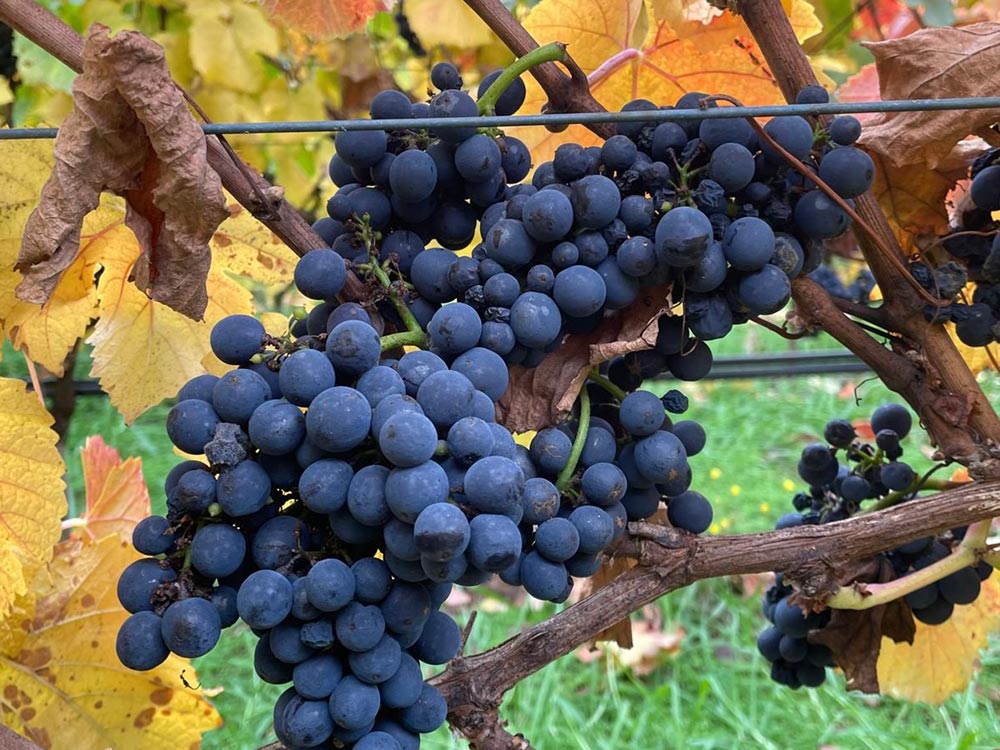
2024 Pinot Noir
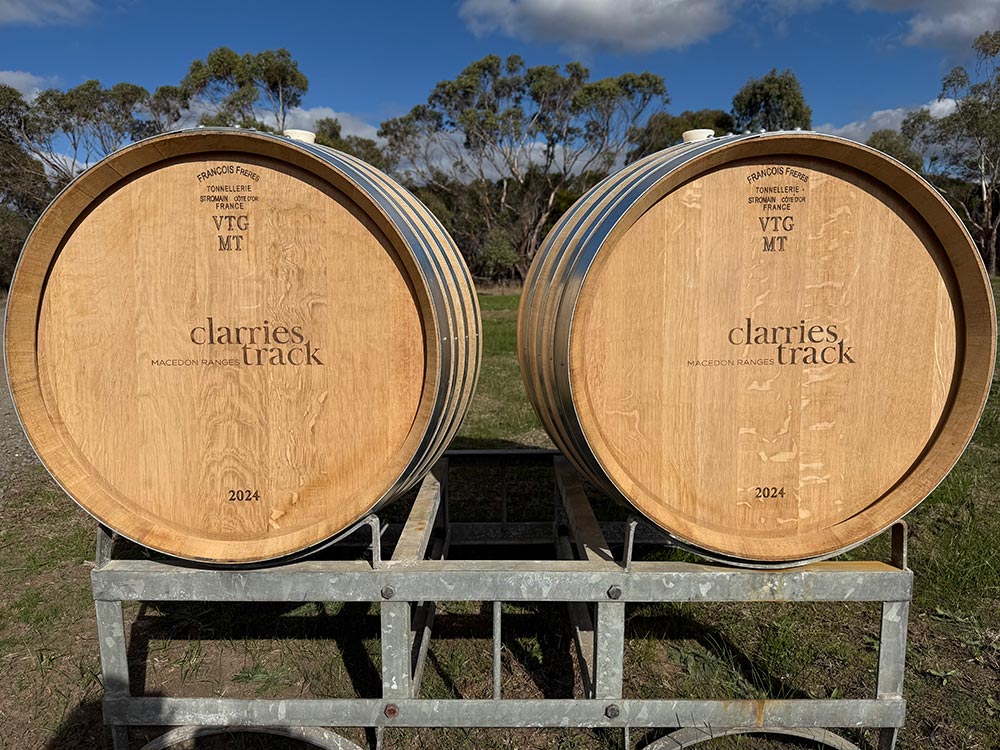
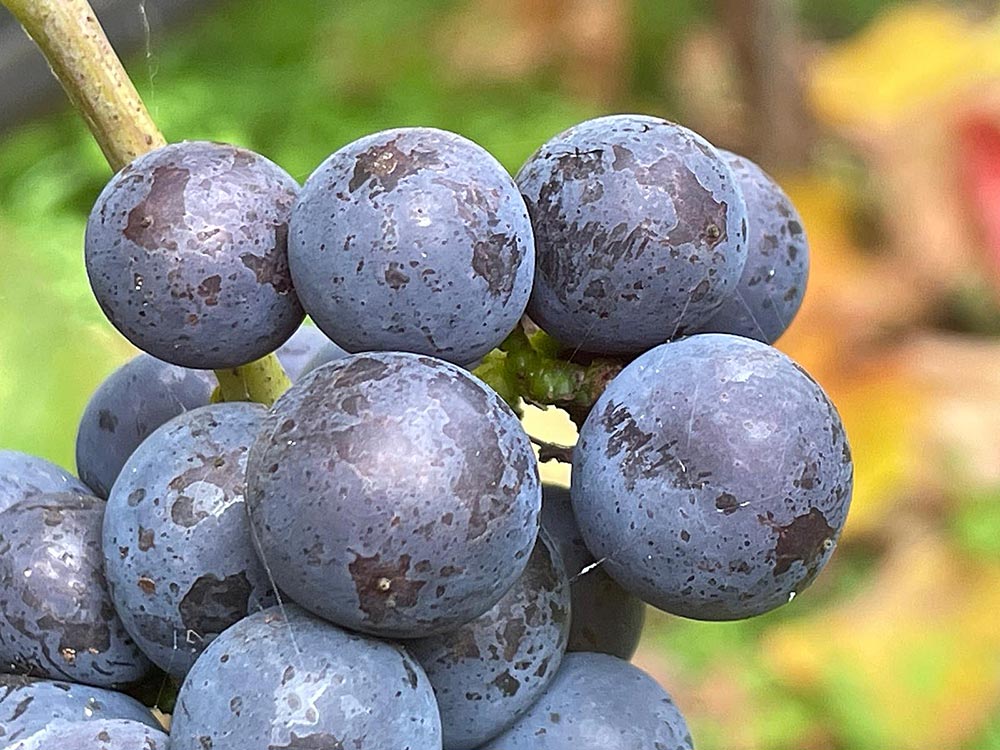
The Pinot Noir is a blend of Abel, MV6 and D4V2 clones and matured in aged French oak.
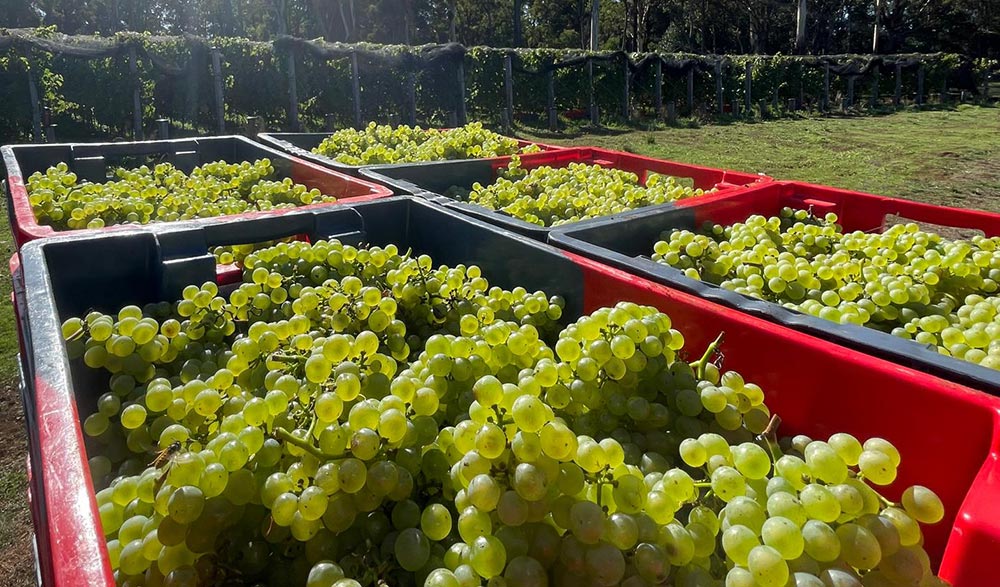
2024 Chardonnay
Developed to catch the sun as early as possible, the east facing block is planted with the Bernhard 95 clone. Our Chardonnay has been matured in aged French oak.
Clarrie's Track Vineyard
Our little block lies on the lands of the Djaara people, we acknowledge the Traditional Custodians and recognise their continuing connection to the land and waterways. We pay our respects to their Elders past and present and extend this to all Aboriginal and Torres Strait Islander People.
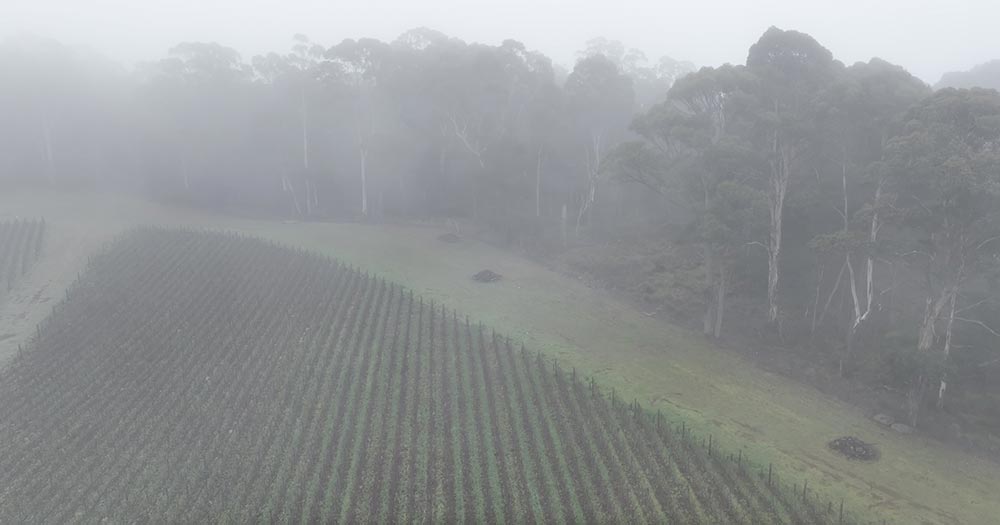
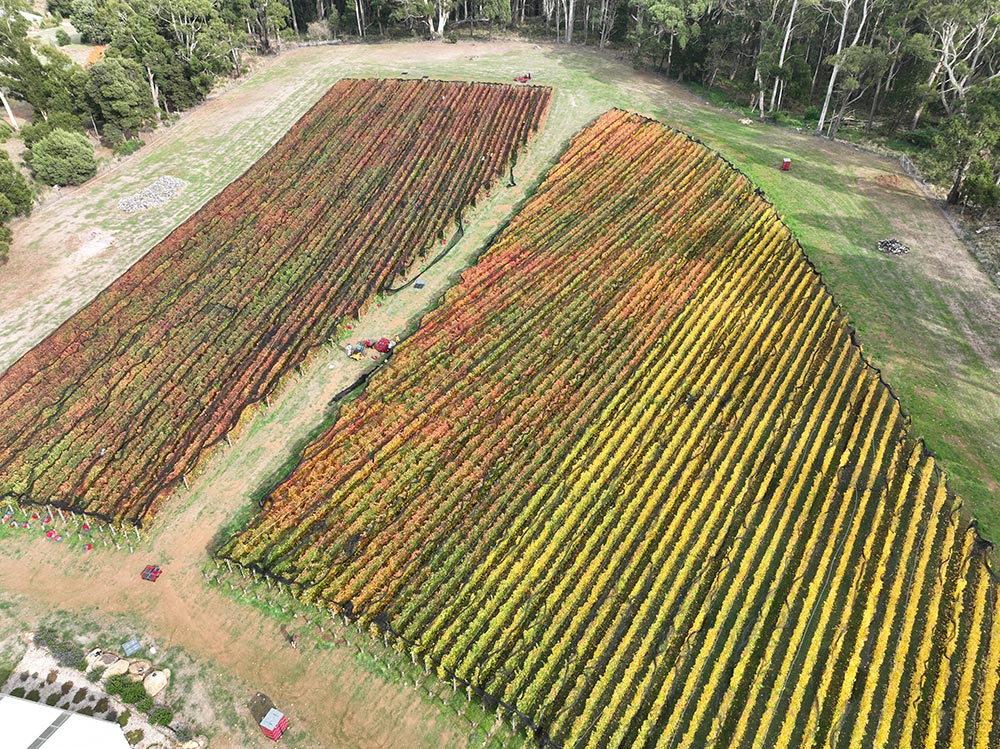
The land was used for horses and hay over the preceding decades and we purchased it to cultivate and harvest grapes in 2019. On the Southern end of the Macedon Ranges wine region, the east facing block catches the sun as it rises beside Blue Mount, and gets the benefit of earlier shading as the hot summer sun moves below the gums to the west.
The rich and deep volcanic soil, contains a naturally high level of minerals. In their natural state volcanic soils can be quite acidic and lack balance, with a high presence of iron and aluminium oxides. Prior to vineyard establishment considerable effort was made to amend the soil in terms of lifting soil pH, calcium and magnesium levels and reducing the impact of iron and aluminium.
The area receives over 1000mm of rain a year with average temperatures ranging from 2 °C (36.5 °F) to mid-20s.
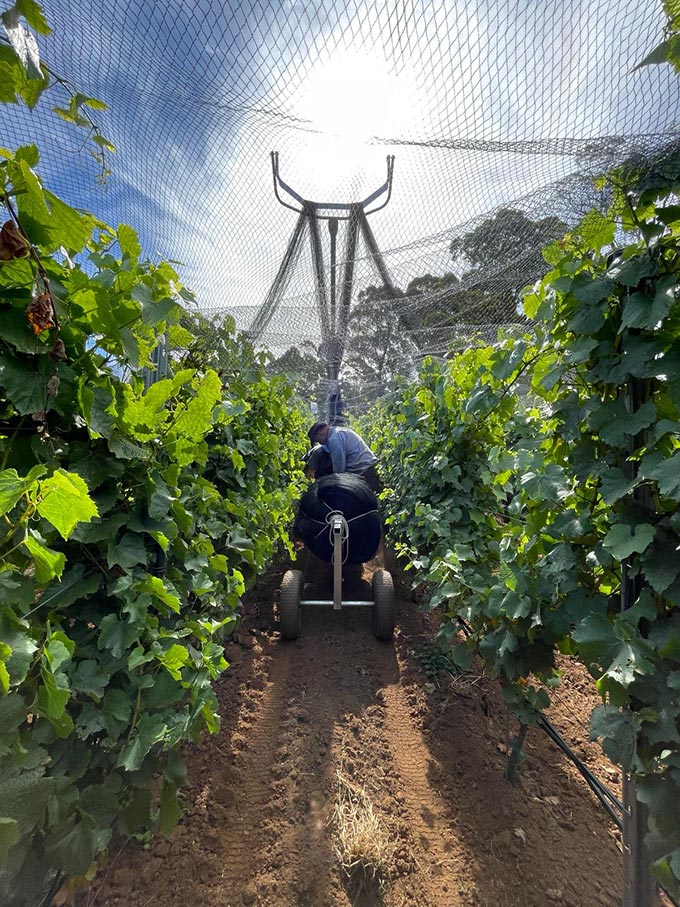
With the goal to increase intensity in the wines, the vineyard was planted in 2021 and is unashamedly trying to replicate the traditional Burgundian vineyards of France with close planted vines. Over 1 hectare of planting there is 10,667 vines. With a row width of 1.25 m and vines 0.75 m apart, Clarrie’s Track vines are planted at a density of 1 vine per square metre. While this makes the time in the vineyard more challenging than traditional planting, this density creates less fruit per vine but with higher intensity. With challenge should come quality!
2392 of the vines are Bernard 95 Chardonnay, the remainder are a mix of Abel, D4V2 and MV6 Pinot Noir.
At Clarrie’s Track we believe great wines start in the vineyard and simply planting vines closer together is not the answer. The soil around our young vines is cultivated regularly during the growing season to ensure low levels of competition and managed through the annual cycle using the Guyot-Poussard technique.
Unless necessary, we use organic techniques throughout the vineyard.